Solution


Electrolyzer and Fuel Cell Tie Rod Monitoring

Converting to renewable energy is one of the primary tools to fight climate change. Storage of energy is critical to make renewables work, and hydrogen, or its derivatives are a promising way to store power. Electrolyzers convert power to hydrogen, and fuel cells convert the hydrogen back to electricity. They are both made by stacking multiple anode and cathode plates and a membrane between each, and tie-rods hold them in place. A real-time monitoring system is needed to measure the tension of the tie rods in order to avoid costly preventive and unplanned maintenance shut downs.

Summary

  • Customer Need / Challenge

    Converting to renewable energy is one of the primary tools to fight climate change. Storage of energy is critical to make renewables work, and hydrogen, or its derivatives are a promising way to store power. Electrolyzers convert power to hydrogen, and fuel cells convert the hydrogen back to electricity. They are both made by stacking multiple anode and cathode plates and a membrane between each, and tie-rods hold them in place. A real-time monitoring system is needed to measure the tension of the tie rods in order to avoid costly preventive and unplanned maintenance shut downs.

  • Interface Solution

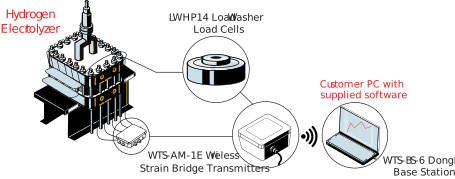
    Interface suggests installing LWHP Precision Load Washer Load Cells connected to WTS-AM-1E Wireless Strain Bridge Transmitter Modules, under the bolts of the tightened tie rods. The WTS-AM-1E’s are encased in a junction box enclosure. The LWHP’s measure the tension between the plates from the tie rods, and the real-time results are transmitted wirelessly from the WTS-AM-1E’s to the WTS-BS-6 Wireless Telemetry Dongle Base Station when connected to the customer’s PC.

  • Results

    Interface’s load cell monitoring system successfully monitors the tie-rods tension in real time, thus preventing unnecessary costly preventive maintenance and unplanned shutdowns of the Electrolyzer.

    * This application note shows Interface base products. This true application used customized column load cells and instrumentation. Contact Interface team for a customized solution.

Materials


  • LWHP14 Precision Load Washer Load Cells
  • WTS-AM-1E Wireless Strain Bridge Transmitter Modules in junction box enclosure
  • WTS-BS-6 Wireless Telemetry Dongle Base Station
  • Log100 Software
  • Customer PC or Laptop

How it Works


  1.  LWHP14 Precision Load Washer Load Cells are installed under the bolts of tightened tie-rods around the Electrolyzer.
  2.  Each LWHP14 is connected to a WTS-AM-1E Wireless Strain Bridge Transmitter Module, which is all encased in a junction box.
  3. The LWHP14’s measure the compression forces from the tightened tie-rod, and the results are transmitted from the WTS-AM-1E to the WTS-BS-6 Wireless Telemetry Dongle Base Station connected to the customer’s PC. Each load cell can be monitored in real time using Log100 software.

Download PDF